

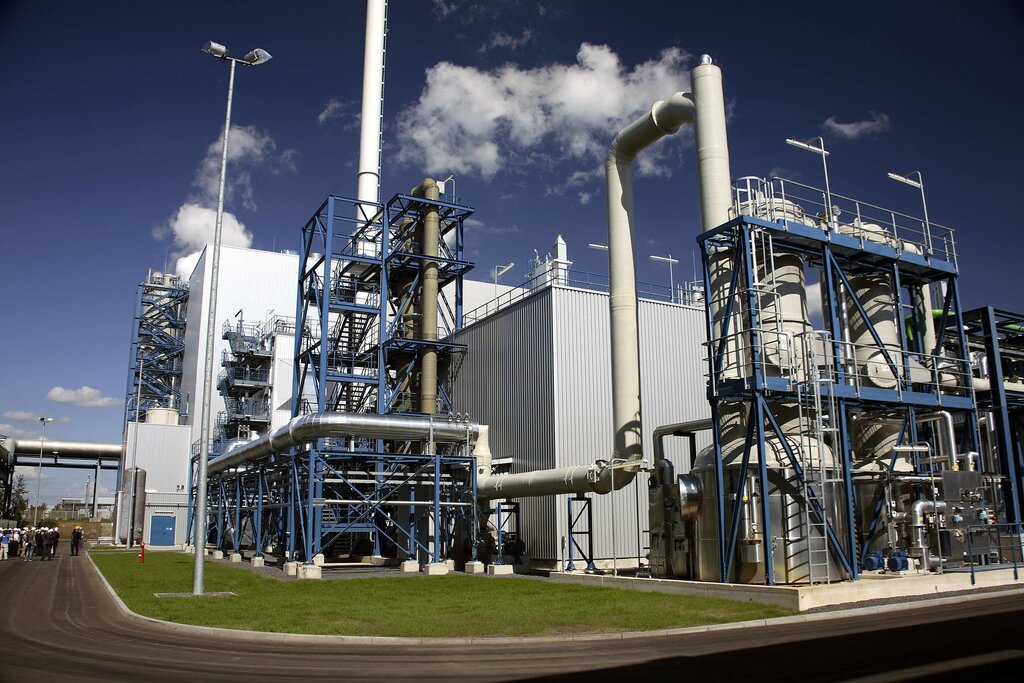
Sustainability has long been one of the defining challenges of modern industry. As global emissions targets grow stricter and environmental accountability becomes a cornerstone of corporate responsibility, industries are being asked to do more than reduce waste. Today’s industries must reimagine how their operations impact the planet. Among the most promising advancements helping businesses meet this challenge are modular carbon capture solutions, which are transforming how sustainability is both achieved and scaled.
Rethinking Industrial Sustainability
For decades, carbon capture was viewed as a complex, large-scale operation. It seemed to be something only feasible for massive facilities with vast budgets and specialised infrastructure. Traditional systems required extensive customisation, significant downtime for installation, and high upfront costs.
But with the rise of modular design, that narrative is changing. Modular systems break away from the one-size-fits-all model, offering scalable, adaptable technology that can be deployed quickly and efficiently. They’ve made carbon capture not only more practical but also more accessible to a much wider range of industries.
What Makes Modular Systems So Effective
At their core, modular carbon capture systems are built for flexibility. Each unit functions as part of a series of integrated modules that can be configured and expanded based on the size and output of a facility. This modularity enables industries to start small, test the technology, and scale up as their sustainability goals evolve.
Beyond flexibility, modular systems offer:
- Faster Deployment: Prefabricated modules can be built offsite, reducing installation time and minimising disruption to ongoing operations.
- Cost Efficiency: By using standardised components, manufacturers lower design and construction costs while maintaining high performance.
- Simplified Maintenance: Modular components can be upgraded or replaced individually, ensuring continuous improvement without full system overhauls.
- Future-Proofing: As technology evolves, modular designs allow easy integration of new advancements, ensuring longevity and adaptability.
These benefits collectively make modular carbon capture solutions one of the most strategic ways to accelerate industrial decarbonisation without sacrificing productivity.
Bridging the Gap Between Innovation and Implementation
One of the most significant barriers to sustainability has always been scale. Many businesses want to embrace greener operations but struggle to find systems that fit their specific needs or budgets. Modular carbon capture helps bridge that gap by allowing industries of all sizes to participate in the global effort to reduce CO₂ emissions.
Whether used in cement production, chemical processing, or steel manufacturing, modular systems provide a pathway to compliance and competitiveness. They enable companies to act quickly, proving that innovation and environmental responsibility can coexist.
The Impact on Global Sustainability Goals
The shift towards modular carbon capture aligns directly with international net-zero commitments. By lowering barriers to entry, this technology expands participation across multiple sectors, creating a ripple effect that can significantly accelerate emission reductions worldwide.
Beyond compliance, it also supports the circular economy. From synthetic fuels to building materials, captured carbon can be reused in various processes, turning waste into a resource and transforming the way industries think about carbon.
Why Modular Is the Future of Carbon Capture
The modular revolution is more than a design choice; it’s a mindset shift. It represents the transition from large, centralised solutions to agile, adaptable technology that meets businesses where they are. It’s about making sustainability achievable today, not someday.
As industries continue to innovate, the ability to deploy and expand carbon capture systems efficiently will be key to meeting future environmental challenges. Modular designs make that possible, delivering both impact and scalability.
Building a Cleaner, Smarter Tomorrow
Sustainability is no longer a distant goal. Instead, sustainability is a practical, scalable reality driven by smart engineering and forward-thinking technology. With the emergence of modular carbon capture solutions, businesses can take decisive steps towards decarbonisation without disrupting their operations or exceeding their budgets.
The modular revolution proves that progress doesn’t have to come at the planet’s expense. Instead, it invites a future where innovation fuels responsibility, and sustainability becomes not just an aspiration, but a standard for how the world does business.