There’s a quiet struggle most people don’t talk about enough the fight to stay focused. In a world filled with endless scrolling, constant notifications, and the pressure to multitask, our attention is pulled in every direction. We start one task, drift to another, and often end the day wondering where our focus went. It’s no surprise that people are constantly searching for ways to sharpen their concentration. But what if one of the most effective tools for training your brain to focus better was something you already enjoy?
Online gaming, often misunderstood as mere entertainment, holds a surprising truth: it can be a powerful mental training ground. Not because it forces discipline, but because it invites attention. It creates an environment where focus isn’t something you struggle to maintain it’s something you naturally fall into.
From the perspective of someone new to gaming, focus begins as a challenge. The first time you enter a game, everything feels unfamiliar. The rules are unclear, the pace can be overwhelming, and even the simplest actions require effort. You might fail repeatedly, miss obvious cues, or feel lost in the mechanics. But here’s where something important happens your brain starts paying closer attention. You begin to notice patterns, timing, and details that once slipped past you. Slowly, your focus sharpens, not because you’re trying harder, but because the experience demands it.
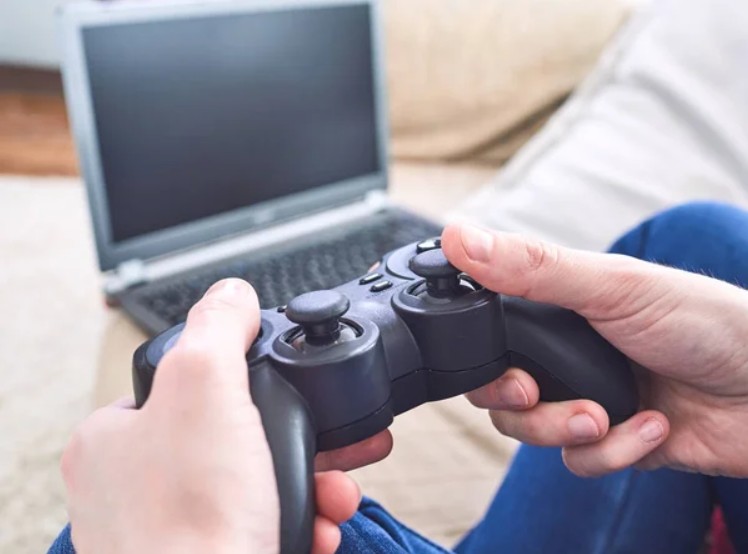
For casual players, gaming becomes something more than just a pastime. It turns into a mental reset. After a day filled with fragmented attention, stepping into a game slot gacor feels different. The noise fades. Your mind narrows in on a single goal. Whether you’re navigating a fast-paced match or solving a small in-game challenge, your attention locks in. This is where gaming reveals its strength it doesn’t force focus through effort; it creates a space where focus happens naturally.
Then there’s the experienced player’s perspective, where focus evolves into a skill that can be shaped and refined. Online games often require players to juggle multiple elements at once visual information, sound cues, timing, and strategy. This trains the brain to handle complexity without losing clarity. Over time, players develop the ability to prioritize information, ignore distractions, and stay mentally present even in chaotic situations. This is not just focus it’s controlled attention.
One of the most fascinating aspects of gaming is how it strengthens what psychologists call “sustained attention.” This is the ability to stay focused on a task over an extended period without drifting. Many everyday activities struggle to hold our attention for long, but games are different. They are designed to evolve, to challenge, and to keep the mind engaged. New scenarios, unexpected outcomes, and constant feedback loops prevent boredom and encourage the brain to stay locked in.
From another angle, gaming also trains “selective attention” the ability to filter out distractions and focus on what truly matters. In many online games, there’s a constant stream of information, but not all of it is important. Players must quickly decide what to focus on and what to ignore. Over time, this skill becomes automatic. You learn to tune out irrelevant noise and concentrate on key details, a skill that translates directly into real-life situations like studying, working, or making decisions under pressure.
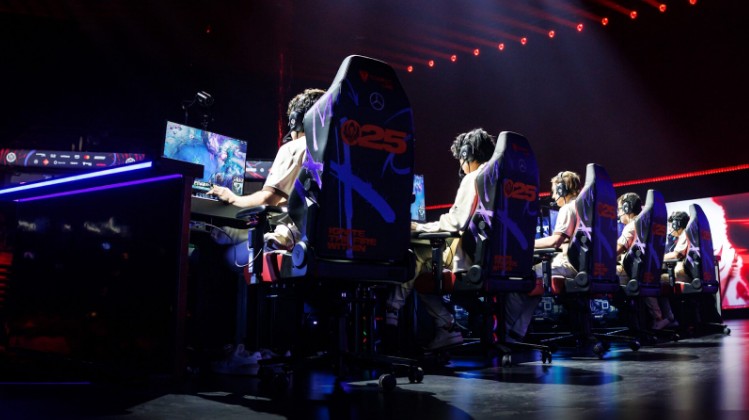
For competitive gamers, focus becomes something deeper almost instinctive. At this level, attention is not just maintained; it is mastered. Players situs slot mahjong enter a state often described as “flow,” where everything feels aligned. Actions become seamless, decisions feel intuitive, and the mind operates with precision. This state of deep focus is something many people struggle to achieve in their daily lives, yet gamers practice it regularly through repetition and immersion.
But gaming doesn’t just teach you how to focus it teaches you how to recover focus. In everyday life, distractions can completely derail your attention. It might take minutes or even hours to regain concentration. In games, however, distractions and mistakes are constant. A missed move, a sudden loss, or an unexpected challenge forces you to reset immediately. This repeated process trains your brain to bounce back quickly, strengthening your ability to regain focus without frustration.
There’s also a social dimension that adds another layer to this training. In multiplayer games, focus extends beyond your own actions. You’re listening to teammates, responding to communication, and coordinating strategies in real time. This requires a balance of attention staying aware of your environment while also engaging with others. It’s a form of dynamic focus that prepares you for real-world interactions, where multitasking and communication often go hand in hand.
From a creative point of view, gaming challenges the idea that focus has to be rigid. Instead, it shows that focus can be flexible and adaptive. Players constantly experiment with strategies, adjust their approach, and think ahead. This keeps the mind engaged while maintaining concentration. It’s not just about staying focused it’s about staying focused while thinking creatively.
Scientific research supports these insights. Studies have shown that video games can improve attention span, enhance visual processing, and increase cognitive flexibility. Gamers often develop faster reaction times and better ability to track multiple elements simultaneously. But beyond the science, there’s a simple reality: gaming trains your brain to care about what it’s doing. And when your brain is genuinely engaged, focus becomes effortless.
Looking at the bigger picture, the journey through online gaming mirrors the process of building focus itself. Beginners learn to pay attention. Casual players learn to maintain it. Experienced gamers learn to control it. Competitive players learn to master it under pressure. Each stage builds on the last, creating a stronger, more resilient mind.
What makes this journey so effective is that it doesn’t feel like work. There’s no rigid structure, no forced discipline, no sense of obligation. Instead, there’s curiosity, challenge, and a natural desire to improve. Focus becomes a byproduct of engagement. You’re not forcing yourself to concentrate you’re drawn into it.
So the next time you log into an online game, remember that you’re doing more than just playing. You’re training your brain. You’re strengthening your ability to stay present, filter distractions, and think clearly under pressure. These are skills that extend far beyond the screen.
In a world where attention is constantly divided, the ability to focus is a quiet advantage. And sometimes, the most effective way to build that advantage isn’t through strict routines or endless effort, but through something far more engaging an experience that naturally pulls your mind into the present and keeps it there.
Online gaming, with all its energy and immersion, offers exactly that: a way to train your brain to focus better, one moment, one challenge, and one game at a time.